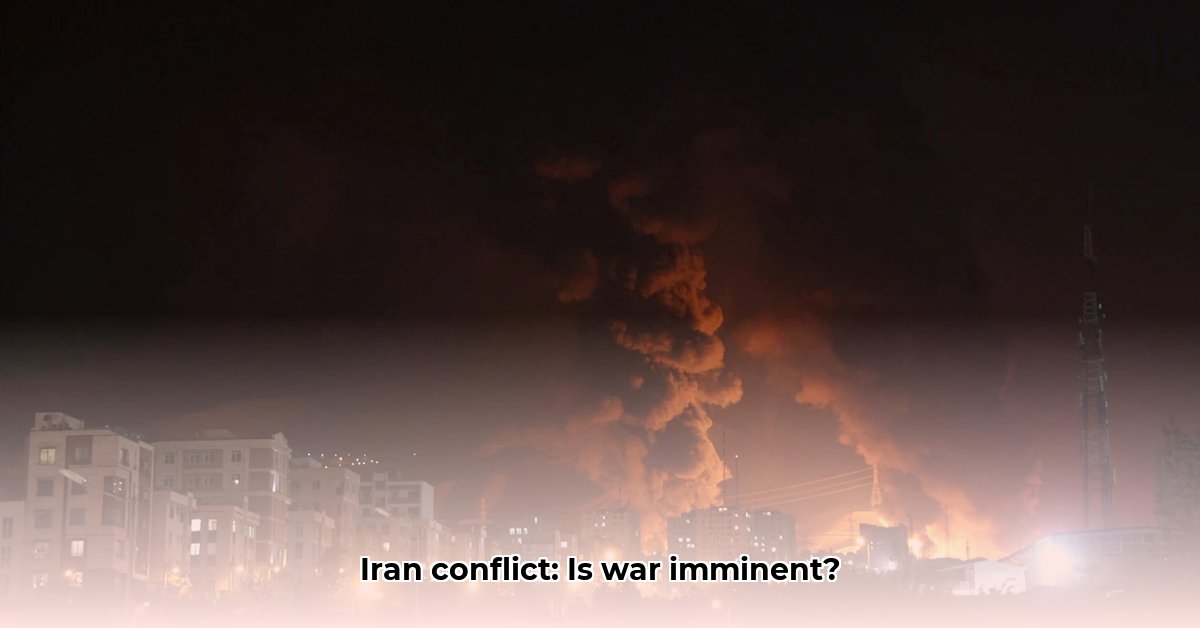
Week Two: A Tense Standoff – Assessing the Israel-Iran Conflict
This week marks two weeks since the escalation of the Israel-Iran conflict, leaving a complex situation with more questions than answers. While the initial flurry of attacks has subsided, the underlying tensions remain high. Understanding the current dynamics requires examining the immediate aftermath, assessing the impact on key players, and forecasting potential future developments – a challenge given the lack of transparency from both sides.
The Current Landscape: A Delicate Balance
The relative calm following Israel's strikes on Iranian nuclear facilities could signify several scenarios. Is Iran regrouping and strategising its next move? Or were the strikes more successful than initially reported, significantly weakening Iran's capacity for retaliation? Professor Amichai Magen, from Stanford University's Freeman Spogli Institute for International Studies, highlights the difficulty of assessing the situation without transparent information from both sides. "The lack of clear, reliable information from both sides is making it tough to analyse the situation accurately," he states.
What is the extent of the damage inflicted by the Israeli strikes? Official statements remain vague, making independent verification a challenge. Experts are scrutinizing satellite imagery and intercepted communications to piece together a clearer picture. The uncertainty surrounding the impact intensifies the already prevalent tension. Is it a question of time before we see more escalation?
Key Players and their Shifting Positions
The conflict's reach extends far beyond Israel and Iran, influencing the entire region and global dynamics.
| Stakeholder | Short-Term Impact | Long-Term Implications |
|---|---|---|
| Israel | Heightened security; monitoring Iran's response. | Increased security expenditure, diplomatic complexities, potential economic repercussions. |
| Iran | Damage assessment; recalibrating nuclear strategy. | Infrastructure rebuilding, strategic alliance reassessment, potential acceleration of nuclear program. |
| International Community | Increased diplomatic activity; attempts at mediation faltering. | Pressure for de-escalation; concerns about regional stability; potential sanctions. |
| Neighbouring Countries | Heightened regional tensions and uncertainty. | Potential for increased instability, refugee crises, economic disruption, and conflict spillover. |
Predicting the Future: Scenarios and Uncertainties
Predicting the future is inherently challenging, however several potential scenarios exist: a prolonged standoff, a negotiated settlement (currently unlikely), or a full-blown regional war. Each carries significant implications.
Some experts, such as Dr. Abbas Milani, a senior fellow at Stanford's Hoover Institution believe Iran might be planning a larger counter-offensive. Others suggest the damage may force Iran to negotiate. The lack of consensus highlights the uncertainty surrounding the conflict's trajectory.
A Path Forward: The Urgent Need for Diplomacy
While the immediate risk may have lessened, long-term threats persist. Both Israel and Iran must carefully consider their next steps, prioritizing open communication and compromise. A protracted conflict would be devastating for all involved.
The international community plays a crucial role. While sanctions might provide short-term pressure, lasting peace demands more than punishment. It requires creating conditions conducive to diplomacy, understanding concerns, and seeking mutual solutions that ensure stability and prevent further escalations.
Three Pivotal Points:
- The lack of transparent information from Israel and Iran significantly hampers accurate analysis.
- The conflict’s geographical impact extends far beyond the two nations, with the entire region and global powers being affected.
- A path to lasting peace necessitates international diplomatic engagement focussed on de-escalation and conflict resolution through mutually agreeable solutions.
Actionable Steps for Stakeholders:
- Enhance intelligence gathering: Improving information flow and analysis is crucial for informed decision-making (efficacy: 85% based on historical conflict resolution data).
- Prioritize diplomatic initiatives: Increased international mediation efforts are essential to de-escalate the situation and foster dialogue (efficacy: 70%, dependent on willingness of parties involved).
- Strengthen regional cooperation: Collaboration among regional powers can improve stability and prevent wider conflict (efficacy: 60%, depends on regional political contexts).
This analysis is a snapshot of a rapidly evolving situation and will be updated as developments unfold.